
[vc_row][vc_column][vc_column_text]
TYPES OF KITCHEN SINKS: CHOOSING THE PERFECT ONE FOR YOUR KITCHEN
In your kitchen space, the sink serves as a central element, both functionally and aesthetically. It’s a long-term investment because once installed, kitchen sinks are used for years. Thus, choosing a type that can harmoniously blend with your kitchen style as well as suit your household needs is an essential aspect of kitchen remodeling planning. However, with so many options available in the market, this task might leave you scratching your head. This post is specially designed to help you make the right choice by evaluating various alternatives. Let’s check out what are the different types of kitchen sinks and their pros and cons.
TYPES OF KITCHEN SINKS BY MOUNTING METHOD
1. Top Mount Sink
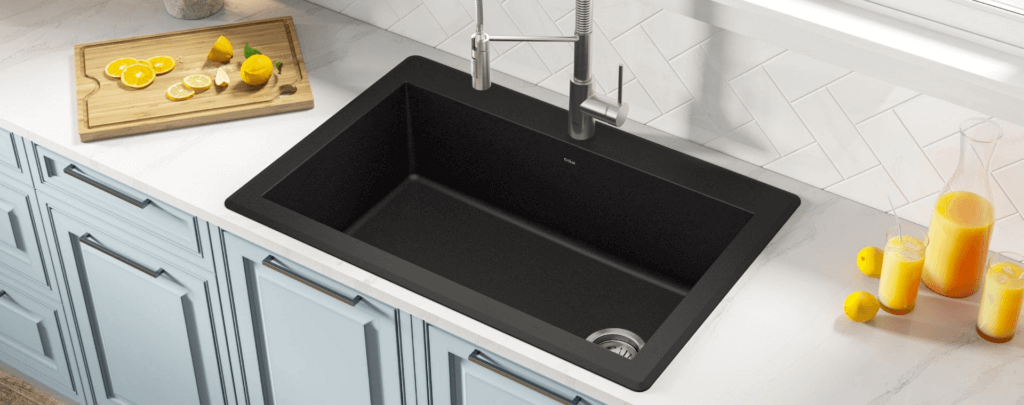
Kraus Bellucci Sink with right drain and metallic black granite
Known by several terms like drop-in, overmount, and self-rimming, this classic sink is the most common option in the market because it works well with almost all countertop materials. As the name implies, a top-mount sink is installed from above the countertop by cutting a hole in it. The sink lip or edges are then, caulked in place, creating a rim that supports the sink.
Pros
- Doesn’t require advanced skills or tools for installation, making it an incredible choice for DIYers.
- Budget-friendly
- Easy to upgrade and replace.
- Protects the benchtop edges
Cons
- Since there’s a gap between the rim and the countertop, it serves as a site for liquid and debris accumulation, making clean-up a challenge.
- The exposed lip disrupts the counter line, making it less visually appealing.
2. Undermount Sink
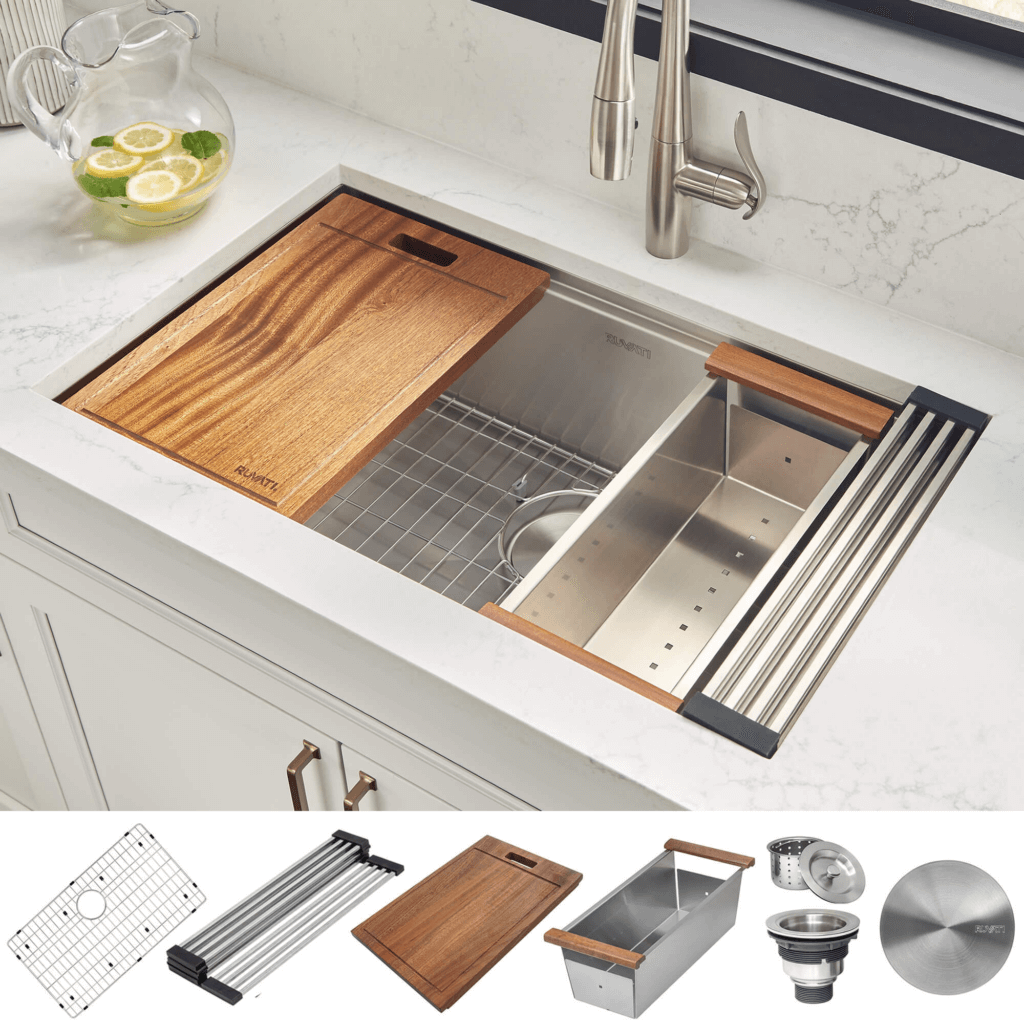
Ruvati Smart Sink with Accessories
Unlike the drop-in sink, an undermount sink is installed from underneath the countertop using special clips or brackets. In addition, the sink edges are secured to the countertop using a silicone caulk to create a watertight seal. The smooth, uninterrupted flow from the sink to the counter gives it an aesthetic appeal and modern look, making it the most likeable option for homeowners.
Pros
- Easy to clean and wipe off crumbs and debris because of no surrounding rim.
- Visually pleasing
- Offers slightly more working space
Cons
- Only suitable for solid, non-porous countertops that can provide strong support
- Difficult to install because it requires precision in measuring, cutting and mounting. This demands more planning and top craftsmanship
- Hard to replace
- High purchase and installation costs
- Counter edges are prone to chipping
3. Farmhouse Sink
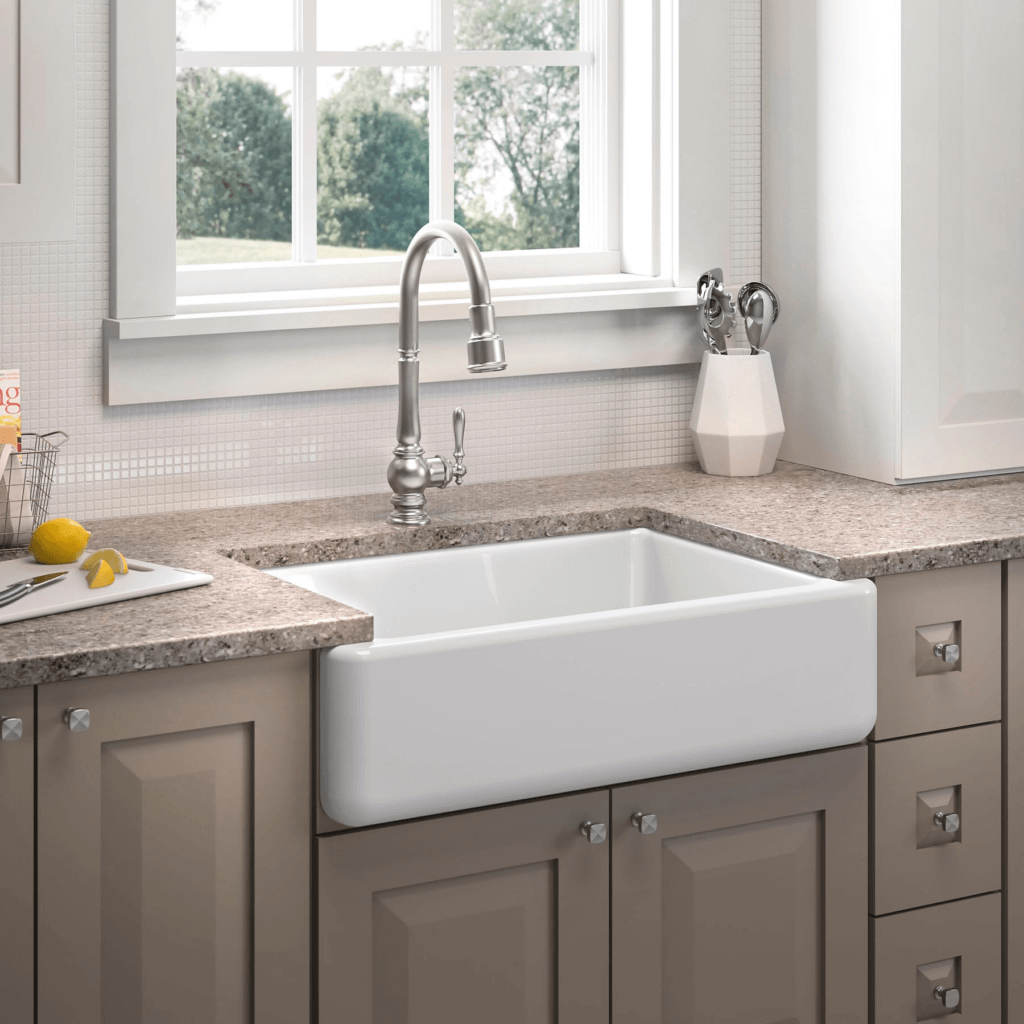
Kohler Whitehaven Farm Sink
What sets a farmhouse sink apart from conventional kitchen sink designs is that it is not placed inside the countertop. Instead, it features an exposed front-facing side which acts as an apron as you do the dishes– the reason why it’s also termed as “apron-front”. Both single and double-basin styles are available.
Pros
- A farmhouse sink adds to the charm of your kitchen and gives it a rustic look.
- Is spacious enough to wash large pans, pots and dishes.
- Since the front wall of the sink rests directly on the edge, you don’t have to lean over the counter. This reduces back strain.
- It doesn’t have any holes for fixtures and faucets, offering you the freedom to choose the type of faucet you like.
- Easy to install and replace.
Cons
- Higher costs compared to other types of kitchen sinks.
- Takes ample counter space because it’s larger than a standard sink. A significant part of your counter needs to be cut out to accommodate it.
4. Flush Mount Sink
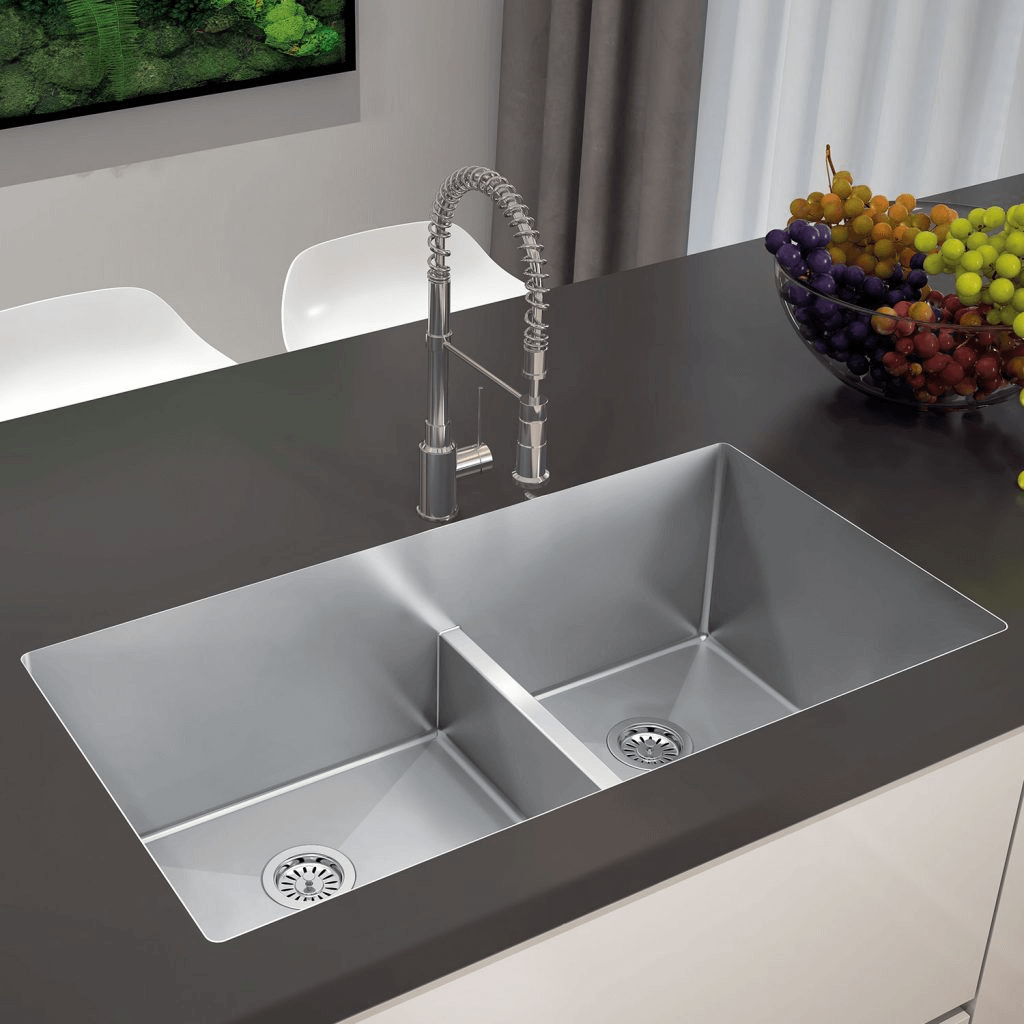
Flush Mount Sink
A flush mount or tiled-edge sink is one of the most stylish options in the market, making it a perfect match for modern kitchens. Although quite similar to an undermount, a flush mount sink sits flush with the countertop, leaving absolutely no seam and uses base cabinets as support. Grout is applied between the countertop and the sink to keep them intact. Typically the sink has a couple of extra inches surrounding the bowl.
Pros
- The flawless continuity from countertop to sink is what makes people invest in this classy feature. The use of the same material for the sink and the countertop makes it look like one unit.
- It’s super easy to clean with absolutely no risk of mold build up
Cons
- You can’t just go and get them from a hardware store because they are only custom-made.
- Requires skilled professionals for taking precise measurements and then, mounting it professionally on your counter.
- One of the most expensive types of kitchen sinks
- Repairing is complicated and time-consuming
TYPES OF KITCHEN SINKS BY DESIGN & CONFIGURATION
1. Single-Bowl Sink
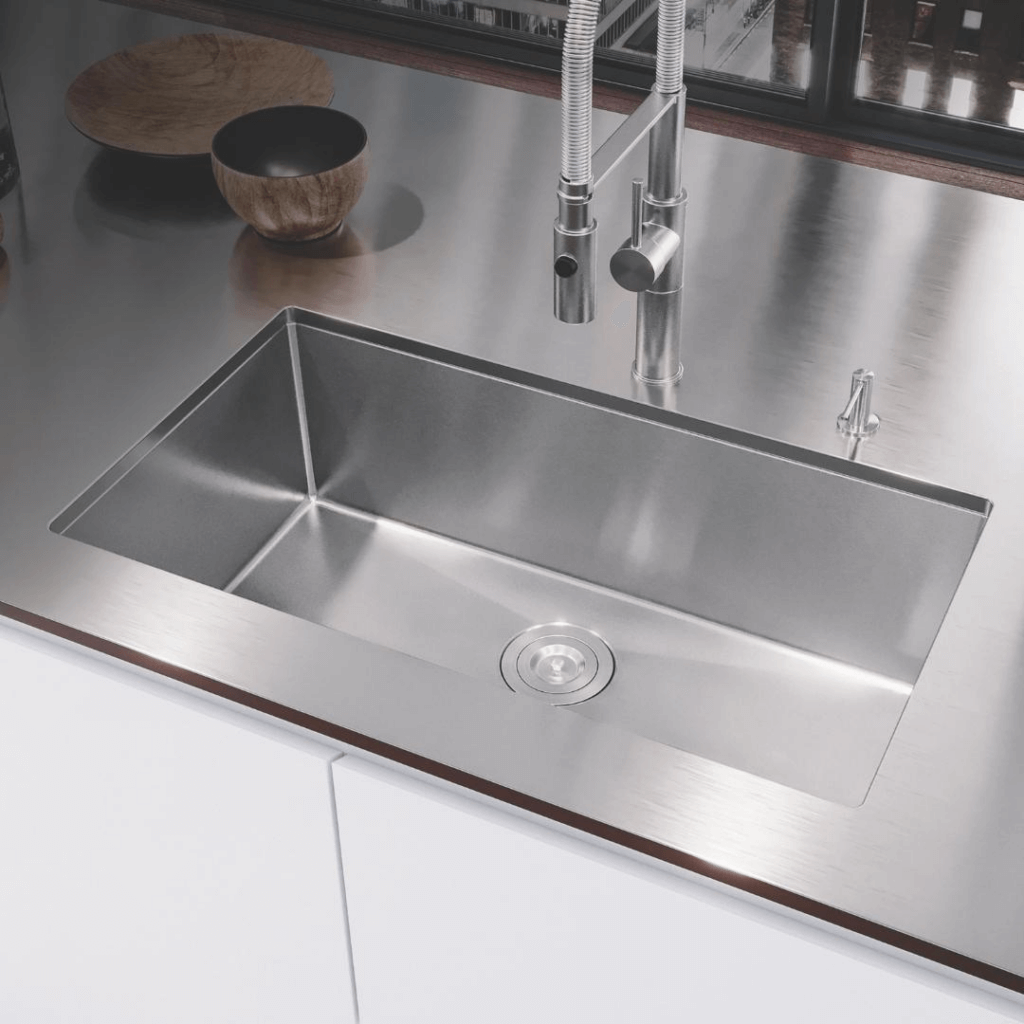
A single-bowl sink comes with a single, undivided basin and includes both in-counter and farmhouse sink option. If you’re looking for a simple and traditional design, you should give this one a tr.
Pros
- One large bowl offers enough space to wash large-sized pots, trays and dishes.
- Its plain and simple design offers ease of cleaning and maintenance.
- Best option for small kitchens as they occupy less counter space compared to double basin sinks.
Cons
- They don’t offer a separate space for soaking and drying the dishes. You have to use a dish rack to place washed dishes.
- Doesn’t allow for multitasking because of an undivided space.
2. Double-Bowl Sink
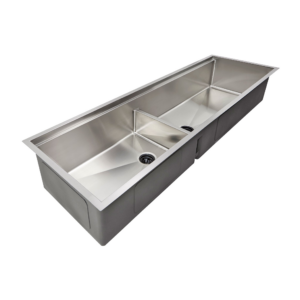
A double-bowl sink features two basins attached side by side. So you’ve got one section for soaking dirty dishes and another for rinsing and drying them. Traditionally, both basins are the same size but there are variations too. Additionally, they are available in various configurations and sizes. A double-bowl sink is a perfect combo of style and functionality. Since it comes in multiple styles, colors and sizes, you’re always going to find the one that fits to your kitchen. Its high flexibility makes it a hard-to-resist option for homeowners.
Pros
- Allows for multitasking because of separate compartments. You can combine dishwashing with food preparation.
- Particularly useful if you don’t have a dishwasher.
Cons
- Not ideal for small kitchens because of their large size.
- The divider makes washing large cookware a challenge.
3. Drainboard Sink
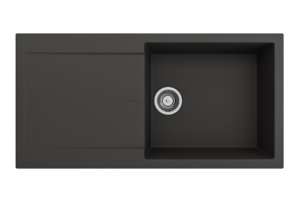
If you’re looking for a type of kitchen sink that can help you maximize your workspace, look no further than this practical option. The built-in drain board on either or both sides serves as a spot for drying dishes and preparing food. The modest slant of the drain board allows the water to drain directly into the sink, keeping your countertop dry and spotless. A dry surface reduces the risk of bacterial growth.
Pros
- Another handy alternative to the dishwasher. Particularly useful for washing and drying delicate crockery like glassware.
- The drainboard can be used for multiple purposes; for peeling veggies, collecting food scraps and storing dirty/washed dishes.
- It allows for the full use of a double-basin sink by freeing up its either sides.
Cons
- Many people are not a fan of its look because the drain board covers a considerable portion of their countertop.
- A built-in drain board means less room for the sink bowl.
4. Island Sink
The increasing popularity of kitchen islands has made island sink a big hit. The chic design and versatility of the sink explain why it has been the most coveted kitchen sink type for several years. The term “kitchen island” is used for a freestanding unit composed of a countertop and cabinets which is accessible from all sides. It is placed in the middle of a kitchen to provide some additional workspace. By installing a sink within this unit, you can make the most out of your tight kitchen space.
Pros
- Saves space on your main counter, which can be utilized for meal prepping and placing kitchen appliances.
- It can be used as a secondary sink, speeding up your chores and dishwashing.
- Offers a pleasant experience.
Cons
- You have to pay additional costs for plumbing services since there’s no waste pipe and water feed.
- Requires enough island space to accommodate the sink, crockery and possibly a drying rack.
5. Corner Sink
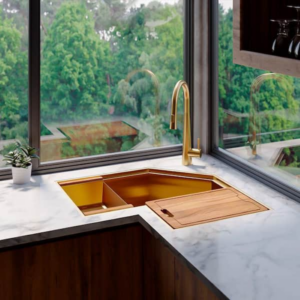
If a double-basin sink is installed in a corner space, it is known as a corner sink. The two basins are diagonally placed on either side of the corner. This category of kitchen sink makes for a unique and eye-catching design.
Pros
- It saves the workspace by utilizing the corner of the countertop.
- Difficult to wash large pots and dishes.
- Spares more floor space.
- Offers a variety of shapes, colors, sizes and materials to choose from.
Cons
- Compared to in-line sink styles, you may have to remove more overhead cabinets to accommodate the sink, resulting in less storage space.
- Installing a sink in an angled space is a difficult task, demanding extra custom cuts in your countertop.
- The deep corner behind the sink can be hard to reach, making it a place for bacterial growth.
- In a kitchen without windows, lighting can also be an issue.
- Can be used by a single person at a time.
- Costly
TYPES OF KITCHEN SINKS BY CONSTRUCTION MATERIAL
1. Stainless Steel Sink
When it comes to popularity, stainless steel holds the top spot. You can find it everywhere from homes to commercial settings because of its ease of use and versatility. It is composed of chromium and nickel and is available in different grades and gauge level (thickness).
Pros
- Highly durable
- Heat and stain-resistant
- Easy to clean and maintain
- Available in many styles and configurations
- Because of its neutral color, it fits in almost all kitchen designs
- Easily affordable
- Anti-bacterial
Cons
- Produces noise if a dish or utensil is dropped in it.
- Hard water stains become easily prominent compared to white sinks
2. Quartz Sink
Quartz composite sink makes for one of the most durable sink options. Produced by a mixture of natural quartz and acrylic resins, this heavy-duty sink gives you the feel of natural stone at much affordable rates.
Pros
- Durable
- Heat and stain-resistant
- No pores mean no spot for harboring bacteria and odors, making it a hygienic material.
- Easy to clean and maintain
- It’s naturally soundproofing
- Affordable
- Available in several different colors
Cons
- Since it’s one of the hardest materials, dropping any fragile items in it means breakage. Washing fine china, glass and crystal demands special care.
3. Granite Composite Sink
Just like quartz, granite composite sinks are also made from ground (granite) particles mixed with acrylic resin as a binder and has almost the same advantages.
Pros
- Highly durable with a lifespan of 40-50 years
- Heat and stain-resistant
- Affordable
- Easy to clean
- Soundproofing
Cons
- Harsh on fragile items
- Their heavy weight demands extra structural support
4. Cast Iron Sink
A cast iron sink is composed of two layers. A strong, durable iron alloy forms the foundation layer whereas a thick enamel coating makes up the second layer. The lustrous look of the sink is attributable to this second layer. A cast iron sink gives you more of a traditional and vintage vibe, and is a hot choice, particularly among those looking for lasting investment.
Pros
- Can withstand stains and wear and tear
- The enamel coat makes it stain-resistant.
- Easy to maintain
- Durable and heavy-duty
- It can last for 20-30 years.
Cons
- Being one of the heaviest types of kitchen sinks, it needs additional support.
- Costly
5. Silestone Integrity Sink
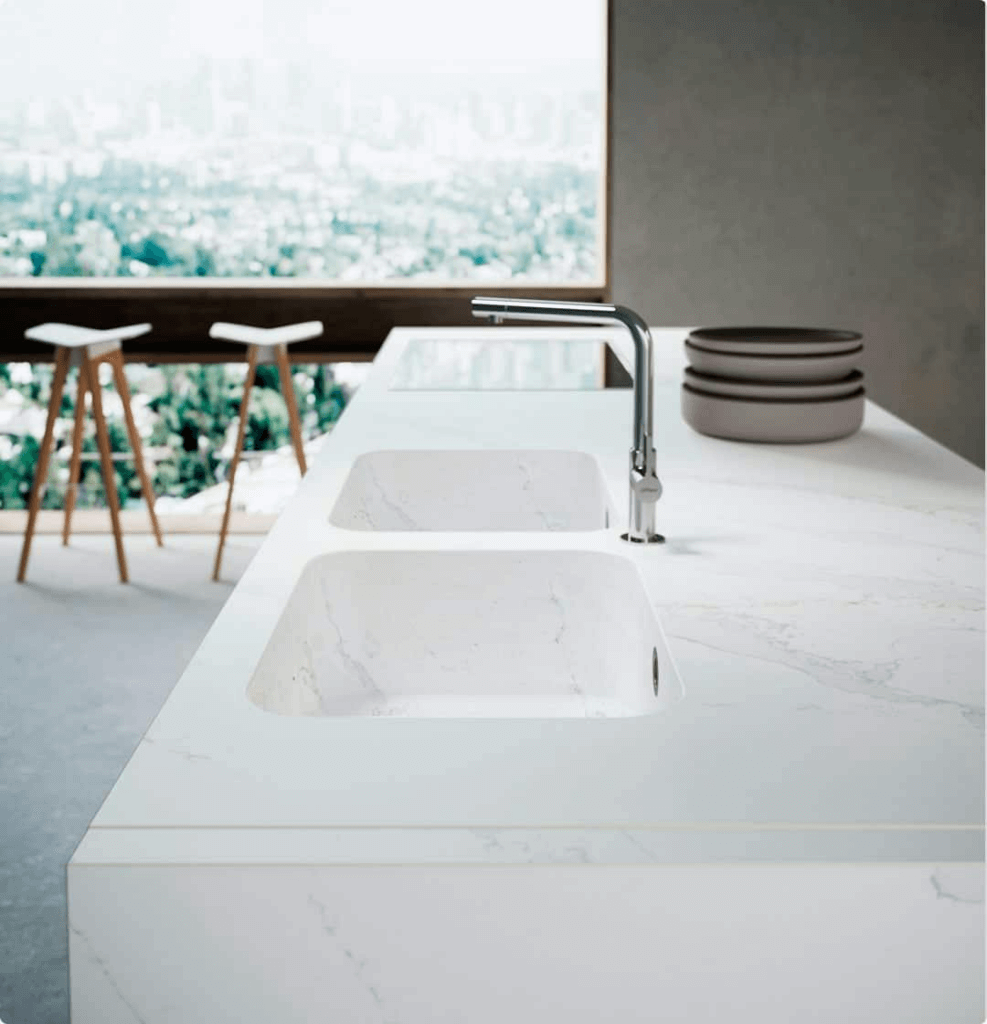
If you’re looking for a fusion of aesthetics and functionality, Silestone Integrity Sink is a chic option to consider. It is a flush mount sink that is built using Silestone as the construction material.
Pros
- There’s a variety of colors, shapes, sizes, and finishes for you to choose from
- Harmonious look with the kitchen
- Highly resistant to scratches and daily impact
- Being nonporous it’s highly resistant to water and moisture
- Easy to clean and maintain
Cons
- Can be more costly than other types of kitchen sinks
6. Fireclay Sink
Fireclay is produced by exposing the mixture of clay and glaze at extremely hot temperatures which makes this an exceptionally durable material. If you fancy farmhouse sinks, fireclay is the perfect material to choose. In fact, fireclay farmhouse sinks have been in use for centuries, yet they’re still in trend.
Pros
- Durable
- Resistant to heat, stains and scratches
- Being handcrafted each piece is unique
Cons
- They are prone to chips and dents
- Demands extra structural support
- Comparatively less affordable
FREQUENTLY ASKED QUESTIONS (FAQs)
1. What is the best type of kitchen sink to buy?
One-size-fits-all approach doesn’t apply when it comes to kitchen sinks. You have to assess various factors like your kitchen and household size, design preferences, budget, and culinary needs. Also, keep the benefits and downsides of each option in mind. After considering all these aspects, you’ll be able to choose the best type of sink for your kitchen.
2. Which is the most durable kitchen sink material?
Quartz, granite and stainless steel sinks are the most durable and resistant to stains, heat, chipping and scratches.
3. What is the standard size of a kitchen sink?
The standard sink size is 22 by 30 inches.
4. What is the best type of kitchen sink faucet?
In terms of material, stainless steel is a durable, affordable and low-maintenance option. Whereas in terms of design, pull-out and pull-down models work well for most kitchen sinks.
CONCLUSION
Now that you’ve got an idea of the different types of kitchen sinks, it’s time to sort out the relevant options. If aesthetics is your priority, undermount, flushmount, granite, and silestone integrity sinks are the best options. If budget is a limitation, top mount, single-bowl, stainless steel, granite and quartz can work well. Whereas if limited space is a concern, corner and drainboard sinks must be preferred. If you still need help choosing the best type of kitchen sink or need kitchen remodeling services, contact Boss Design Center and we’ll assist you in every way possible.
[/vc_column_text][/vc_column][/vc_row]